The Pressing Trap: Why Chasing the Ball Can Open a Passing Lane
Understand how a football pressing trap steers a player toward limited options, and why the nearest defender is only one part of the pressure.
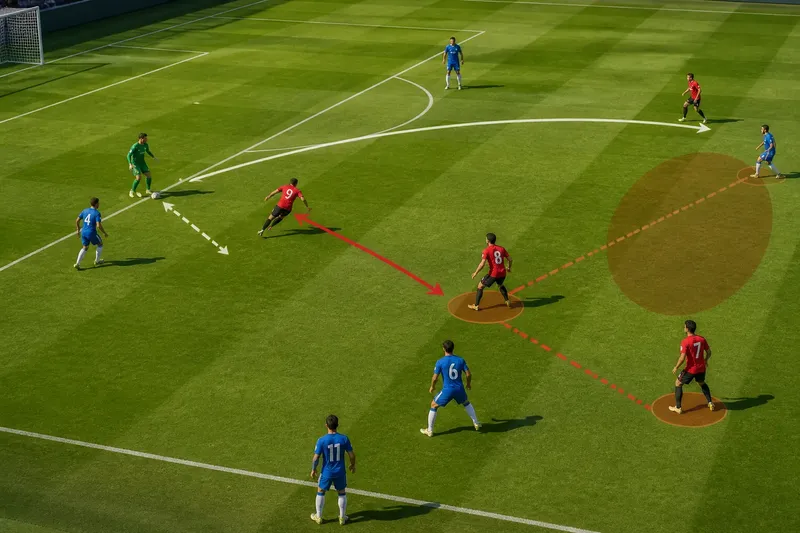
A center back receives the ball near the edge of the penalty area, and an opposing forward sprints straight at him. The defender passes calmly into midfield, where nobody is close enough to stop the next move. It looks like a failed press; often, the real failure is that the forward ran without the support that would make the chase useful. A football pressing trap is not a crowd rushing toward the ball. It is a coordinated attempt to make one route look available while quietly making the other routes harder to use.
What is a football pressing trap?
A pressing trap is a planned way to direct the opponent’s possession toward a particular area or choice, then apply pressure when the opponent’s options have narrowed. The trigger might be a pass to a fullback, a receiver facing the sideline, or a slow return pass to the goalkeeper. The defending team is not simply waiting for a mistake; it is arranging the picture in which a mistake becomes more likely.
The trap has two parts: pressure on the ball and cover for the passes that pressure could invite. A forward may close the center back while showing him toward the touchline. A teammate then moves to block the pass back inside, while another defender watches the likely receiver. The ball carrier can still choose, but the useful choices are being reduced.
“Trap” does not mean the opponent has no possible escape. A long pass, a one-touch combination, or a sharp change of direction may beat the pressure. The word describes the defending team’s intention, not a magical force field around the ball.
Why does chasing the ball open a passing lane?
A direct sprint toward the ball often leaves the player’s starting position uncovered. If a forward runs at a midfielder from the wrong angle, the midfielder may pass behind that forward into a teammate. The runner has arrived near the ball, but the pass has gone through the space he was supposed to protect.
Body shape matters. A defender who approaches square-on may allow the ball carrier to turn either way. A curved run can close one direction and keep the runner between the ball and a central passing lane. That approach is sometimes called a pressing angle: the defender’s route is chosen to influence the next pass, not merely to reach the player.
The timing can cause the same problem. If one player accelerates before teammates are set, the opponent can pass through the gap between them. If the group moves together, the nearest defender’s advance can coincide with nearby players stepping up, narrowing the receiving space. A fast chase without those supporting movements is a generous invitation to play around the runner.
How does a team steer the ball toward a trap?
The first presser often uses the run to make one pass appear safer than another. For example, a striker may approach a goalkeeper from one side, blocking the direct pass to a center back while leaving the pass to the opposite center back visible. That receiver may then find the touchline close and the central route crowded. The apparent invitation is useful only if teammates are positioned to deal with the pass once it arrives.
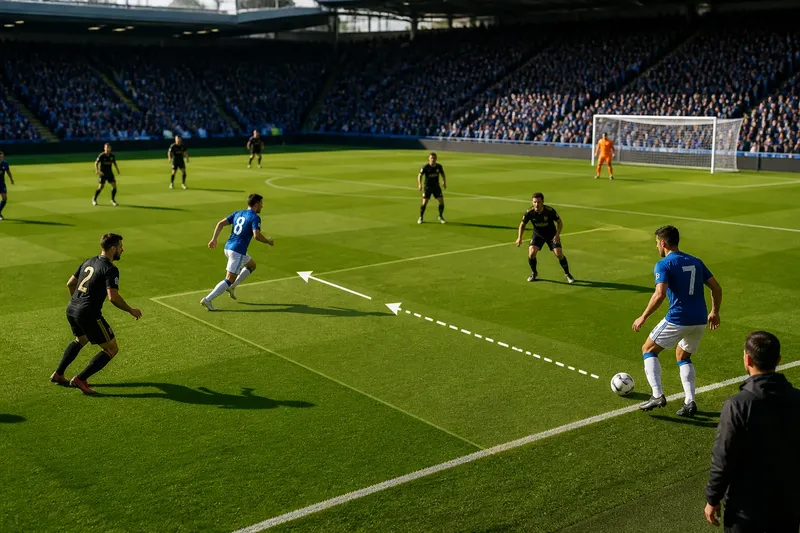
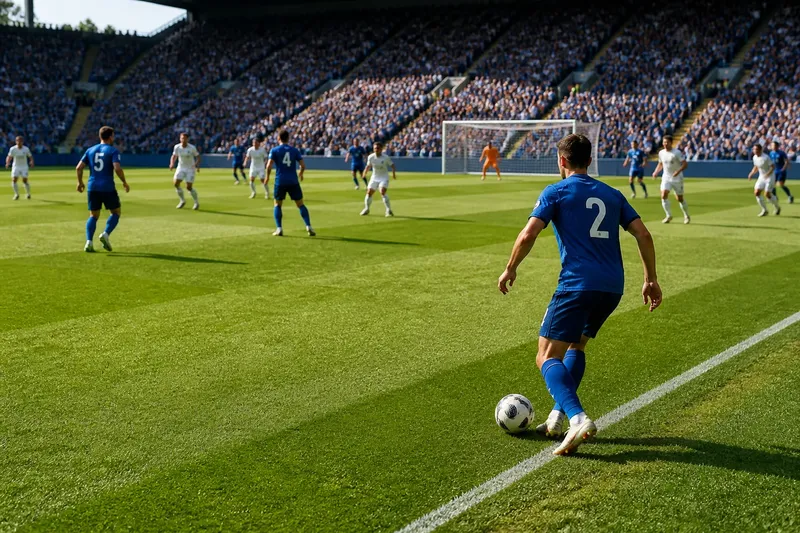
Teams can also use the touchline as an extra boundary. A receiver near the sideline has fewer directions in which to turn than a player in the middle of the field. The defending team may press from the inside, making a forward pass down the line seem preferable, while a nearby defender prepares to challenge that option and another covers the return pass.
The sideline does not win the ball by itself. If the receiver has time to turn, or if the defending team leaves an easy pass inside, the boundary has merely provided scenery. The trap depends on closing the routes that lead away from the chosen area while keeping enough balance to respond if the opponent escapes.
What does each player do during the press?
The nearest defender is usually visible, but the less visible jobs are just as important. A teammate may screen a passing lane by standing in the route between the ball and a potential receiver. Another may mark the next player likely to receive the pass, while a deeper defender protects space behind the group.
These roles change with the ball’s position. If the opponent passes from the center back to a fullback, the nearest attacker may press the receiver. A central midfielder might move to block a pass into the middle, and the winger on the far side may tuck closer to prevent an easy switch. The back line adjusts behind them so a direct ball over the press does not leave an attacker with open space to run into.
That last detail separates coordinated pressure from an unplanned rush. If the first line charges forward but the defenders behind it stay deep, the opponent may find a large pocket between the lines. If the back line pushes up without support in front, a pass into the space behind can become dangerous. Pressing asks the whole team to manage distance and timing, not to copy the nearest player’s sprint.
When should the press begin?
A pressing trigger is a cue that tells players when to move together. Common cues include a pass toward the sideline, a receiver taking a poor first touch, a backward pass, or a player receiving with his back to the direction of attack. These moments can limit what the receiver sees and how quickly he can act.
A trigger is not an automatic command to charge. The team still needs enough players close enough to support the pressure, and the relevant passing lanes need attention. If the receiver has a clear forward option and the defending team is stretched, holding position may be wiser than starting a chase that cannot be completed.
For a viewer, the cue is often easier to spot than the intended destination. Watch whether several defenders begin moving as the pass travels, rather than after the receiver has settled the ball. Then notice which route the first presser appears to discourage. That combination can reveal the trap even when the opponent keeps possession.
How can you tell a trap from a failed chase?
A useful distinction is whether the movement is shaping the next action. In a coordinated trap, the presser approaches from an angle, nearby players cover likely outlets, and the team shifts toward the side where it wants the ball to go. In a failed chase, the runner often goes straight at the ball while opponents remain free in the next passing lanes.
Imagine a fictional team pressing a goalkeeper’s short build-up. Its striker curves toward the goalkeeper to discourage a pass to the left center back, while the winger moves toward the right-sided receiver and a midfielder shades the pass into the center. If the goalkeeper chooses the right side, the winger closes the receiver as the midfielder blocks the inside option. The expected observable result is that the receiver has less time and fewer clean forward passes, though he may still escape with a quick pass or a long ball.
Do not judge the press only by whether it produces an immediate turnover. The opponent may be forced backward, toward a hurried long pass, or into a pass to a less useful area. Those outcomes can help the defending team regain its shape or contest the next ball. A team can also press well and still be beaten by accurate execution; the opponent’s escape does not, by itself, prove that the trap was absent.
What questions help you read a pressing trap?
Why does the presser run at the ball from an angle?
The angle can block one passing route while encouraging the ball carrier toward another. It also helps the presser stay between the ball and a central option, rather than allowing a simple pass behind the run.
Why does the far-side winger move inward?
Moving inward can reduce the space available for a switch through the center and keep the winger close enough to react if play changes sides. The exact position depends on the team’s shape and how much space it is willing to leave near the opposite touchline.
Is a long pass a sign that the press worked?
It can be, if the pressure has made a short pass difficult and the defending team is positioned to contest the longer ball. But the pass may also be a deliberate attacking choice, so look at the pressure, available short options, and defenders’ positions together.
Why does a team sometimes stop pressing after one pass?
The intended trigger may have passed, or the opponent may have moved the ball into a position where the pressing team is no longer close enough to support a challenge. The team may then retreat, reset its distances, and wait for a more favorable cue instead of continuing a chase that has lost its purpose.
What should you watch for on the next possession?
Start with the player nearest the ball, then widen your attention. Ask which direction that player is trying to close, who is covering the next pass, and whether the rest of the team is moving to support the same choice. You do not need to identify a named formation to see those relationships; the angles and distances are on the field.
Also watch what happens after the opponent passes away from the pressure. Do the defenders shift together and create a new cue, or does the first runner continue forward while the rest of the team stays behind? That small distinction separates a team steering possession from a collection of players reacting to it. A pressing trap is easiest to recognize not when everyone runs at the ball, but when each movement makes a different escape route less comfortable.