Why the Offside Law Took Its Modern Shape
Why the offside law changed: trace how football moved from restrictive player-count rules to judging an attacker’s position when a teammate plays the ball.
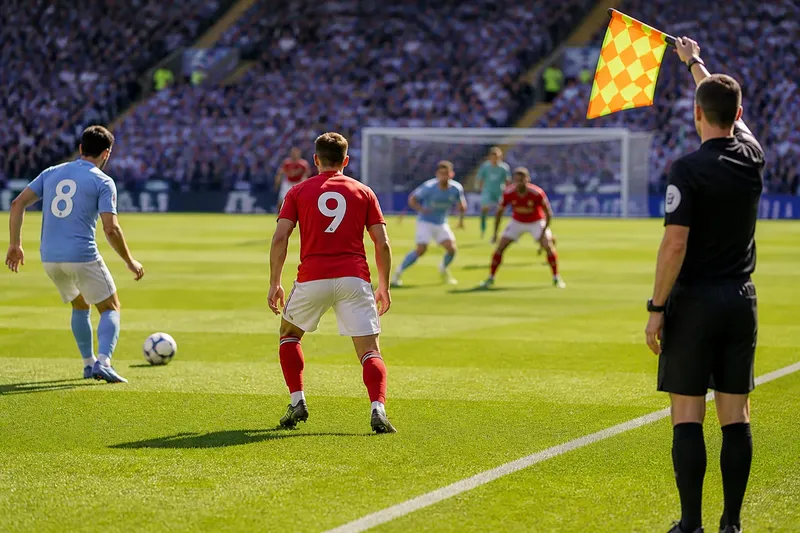
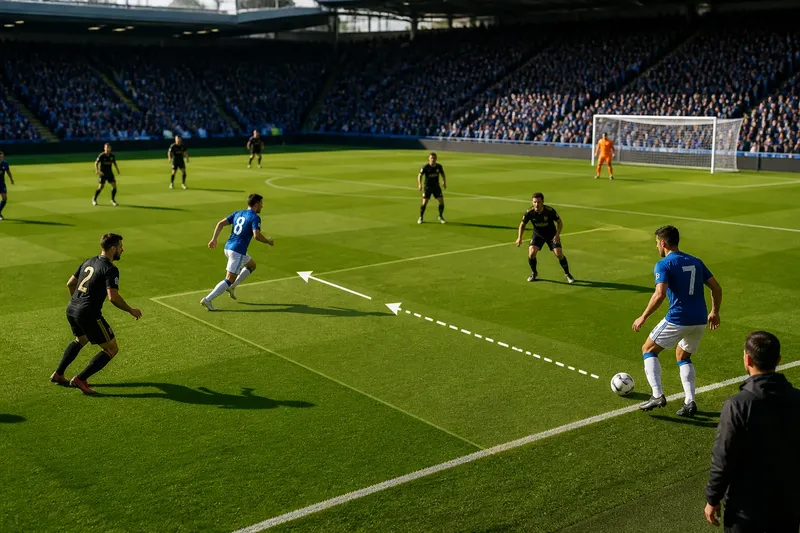
A forward waits near halfway as a teammate shapes to pass; then the flag rises before the ball reaches him. The history of the offside law is a history of changing answers to a practical question: how much freedom should attackers have to wait ahead of the ball?
One useful historical marker is the original 1863 Laws of the Game, published by the newly formed Football Association in England. Their offside rule required an attacker to have three opponents between him and the opponent’s goal when the ball was played. Later changes loosened that restriction, while the modern law focuses on an attacker’s position at the moment a teammate plays or touches the ball and on whether the attacker becomes involved in play.
The 1863 rule restricted forward passes
The Football Association’s 1863 offside law required three opponents between an attacker and the opposing goal line when a teammate played the ball. In practical terms, that made it difficult to send a forward pass to a teammate waiting close to goal without enough opponents between him and the line.
This was a specific rule of early association football, not a description of every football code or every version of the game. It encouraged attacks built around carrying the ball and moving forward with teammates. The restriction also reflected a broader concern of the period: a player should not gain an easy advantage by remaining far ahead of the action.
A player-count test could be blunt. The positions of other players mattered even when an attacker was not contesting the ball or affecting a defender, so the rule sometimes restricted forward positioning more than the immediate play seemed to require.
The three-opponent test gave way to more attacking room
The Football Association later reduced the number of opponents required between an attacker and the goal. The change commonly associated with 1925 replaced the three-opponent test with a two-opponent test. That made it easier to play a forward pass while retaining an offside boundary.
The tactical effect was not simply permission to station a forward by the goal. Defenders had to consider the space behind their line, while attackers could time runs into that space. A midfielder’s pass and a forward’s movement became more closely linked: the relevant question was not just where the receiver ended up, but where he was when the ball was played.
That shift made timing more important. A forward could now start nearer the defensive line, but a run made too early could still leave him in an offside position at the decisive moment.
The modern law separates position from offense
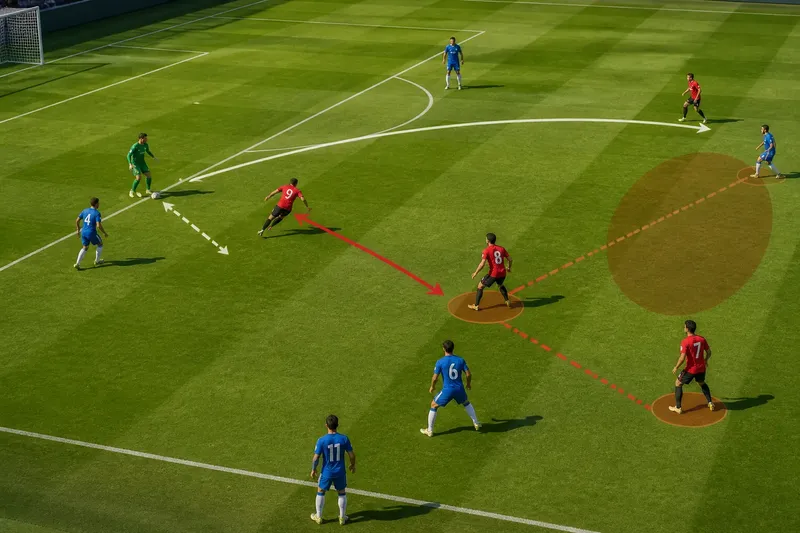
Under the current law, an attacker’s offside position is assessed when a teammate plays or touches the ball. The attacker is in that position if part of the head, body, or feet is nearer the opponents’ goal line than both the ball and the second-last opponent. Hands and arms do not count. Being in an offside position alone is not an offense; the player must become involved in active play, interfere with an opponent, or gain an advantage in the ways set out by the law.
This distinction explains why a forward can be beyond the defenders without automatically stopping play. If the ball goes elsewhere and that forward does not affect an opponent or gain an advantage, the position alone may not be penalized. A player who starts level with the relevant opponent can also run beyond the line and receive the ball, provided the player was onside when the teammate played it.
The goalkeeper is not automatically the opponent used for the comparison. The test concerns the second-last opponent, who may be a field player if the goalkeeper has moved away from the goal line.
Why do close offside calls still confuse viewers?
Why does the pass moment matter more than the reception?
The position is judged when a teammate plays or touches the ball, not when the receiver gets it. A runner may appear well ahead at the end of the run but have been level or behind at the relevant moment.
Does standing in an offside position always stop play?
No. Position alone is not an offense. The attacker must become involved in active play in a way covered by the law.
Can a defender’s touch reset the offside decision?
A deliberate play by a defender can affect whether a later involvement is treated as offside, but a deflection or save is treated differently. The distinction depends on the nature of the action, not simply on which team last touched the ball.
Why might an assistant referee delay the flag?
On a close attack, an assistant referee may wait until the relevant involvement is clear before signaling. The delay does not change the test; it lets play continue while the phase develops.
Read the moment in the right order
For a disputed call, freeze the action at the instant the teammate plays or touches the ball. Identify the second-last opponent and compare that player’s position with the attacker’s relevant body parts and the ball. Then ask whether the attacker became involved in one of the ways defined by the law.
Say a midfielder has the ball, with a forward level with the second-last opponent. As the midfielder passes, the forward starts running and reaches the ball beyond the defender. Because the forward was level when the pass was played, the later separation does not make the run offside.
Imagine instead that the forward is already beyond the line when the midfielder passes to a winger on the opposite side. If the forward neither contests the ball nor affects an opponent, the forward’s position alone need not stop play. That distinction is the practical legacy of the law’s shift: attackers gained more room to move ahead, while timing and involvement remained central to the decision.
For the modern offside law, keep two snapshots separate: the attacker’s position when the ball is played and the attacker’s later involvement. It is a small pause in the viewing process, and often a more useful one than arguing with the flag from the couch.