Watching a Match Through Its First Five Minutes After Losing Possession
Learn to read the first five minutes after a team loses possession by spotting its immediate recovery attempt, retreat into shape, and later adjustments.
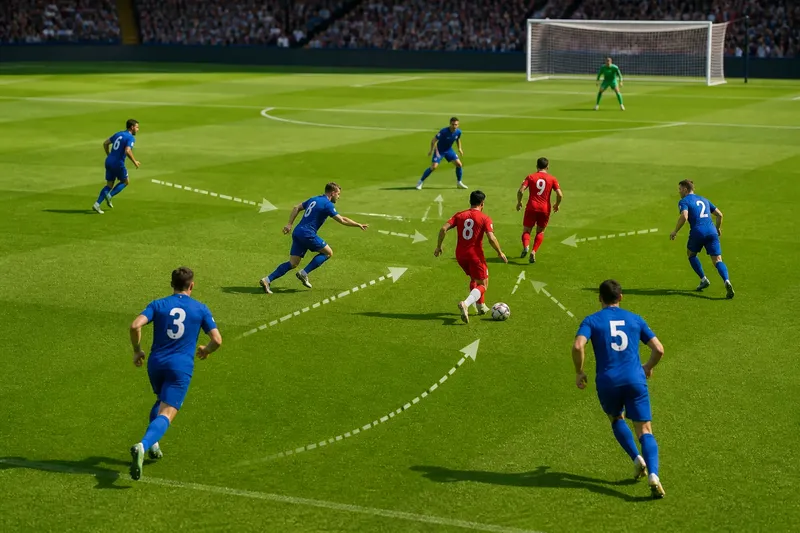
The ball skips off a midfielder’s boot, an opponent collects it, and the broadcast camera follows the new attack. For a moment, the team that just lost possession is easier to understand than the one carrying the ball. Watching the first five minutes after that turnover reveals whether its players try to recover the ball quickly or retreat into defensive shape.
This is a viewing exercise, not a verdict on whether a team is brave, organized, or well coached. The same side may press after one loss and fall back after another, depending on where the ball goes, how its players are positioned, and whether an opponent has escaped the first challenge.
Use five minutes as a viewing window, not a stopwatch test
Pick a match and begin with one clear turnover: a loose touch, an intercepted pass, or a tackle that leaves the other team in control. Mark the moment mentally, then watch the next few minutes of play for the consequences. The five-minute window is a practical viewing frame, not a claim that a team should react in a fixed number of seconds.
Keep your attention on the side that lost the ball. When the camera follows an attack, the obvious subject is the ball carrier. Instead, look briefly behind the ball: who moves toward the new carrier, who covers the nearest forward pass, and who begins running back toward the team’s own goal?
If the broadcast stays tight on the ball, use a replay or a wider camera angle when one is available. There is no need to pause constantly. A single turnover and a few clear observations are more useful than trying to track every player during every passage.
Separate an immediate recovery attempt from a retreat
An immediate recovery attempt is a group response to the change of possession. The nearest player may close the ball carrier, while teammates shift to reduce nearby passing options. The purpose, visible in the movement, is to make the opponent’s next action difficult and create a chance to regain control before the attack develops.
A retreat into shape looks different. Players turn and recover toward positions in front of their own goal, preserving space between teammates and protecting likely routes forward. One player may still approach the ball, but the larger pattern is a backward reset rather than a coordinated effort to win it right away.
Do not classify a team by the first sprint alone. A player can chase because the ball is close, while the rest of the side retreats. Conversely, a team may press collectively without every player running directly at the carrier. Look for shared direction: are several players moving to close space around the ball, or are they restoring a defensive line and denying the route toward goal?
It also helps to distinguish pressure from a successful recovery. A team can make a genuine attempt to regain the ball and still fail. If the opponent passes out of pressure, that does not turn the original movement into a retreat; it means the recovery attempt was bypassed.
Watch the players who are not near the ball
The nearest defender attracts attention, but the supporting movement tells you whether the action is collective. A teammate may cover the lane toward the center, another may move close enough to challenge the next receiver, and a farther player may hold position to prevent an easy switch of play. These movements can make a recovery attempt look organized rather than like a series of separate chases.
During a retreat, the same players may make a different set of decisions. They can drop toward their own half, stay goal-side of opponents, and leave the ball carrier less direct access to the middle. The team is giving ground to regain order, not necessarily conceding that the opponent can advance wherever it wants.
Follow one player away from the ball for a few seconds. Does that player step forward as a pass is played, or continue running back? Does a teammate take over the space just vacated? The answers offer better evidence of a shared response than the carrier’s next touch does on its own.
Read the opponent’s escape and the team’s next choice
A recovery attempt often has a visible turning point: the opponent plays a safe pass, slips the ball into space, or carries away from the nearest pressure. Watch what the defending team does after that escape. It may continue pushing forward, then retreat when the opponent passes the first line. Or it may abandon the recovery attempt at once and rebuild its shape.
This change of plan matters. Teams do not have to choose between pressing forever and retreating immediately. A brief attempt to disrupt the opponent can give way to a compact defensive block when the ball reaches a safer outlet. The useful question is not simply “Did they press?” but “What made them stop, continue, or change direction?”
Notice where the ball ends up after the response. If the opponent is forced toward the sideline, plays backward, or has to send a hopeful pass forward, the defending team has at least limited the attack’s options. If the opponent carries through open central space, the attempted recovery may have left room behind it. These outcomes describe the passage; they do not by themselves explain every player’s decision.
Try the exercise across one viewing session
Say you are watching a league match and a team loses the ball near the center circle. The nearest midfielder moves toward the new carrier, a teammate blocks the forward pass, and the rest of the side shifts up rather than immediately running back. If the opponent then escapes with a pass toward the wing and the players turn to recover, you can describe the sequence as an initial recovery attempt followed by a retreat into shape.
For a first viewing session, choose one team and repeat the same routine whenever it loses possession. You can jot brief notes in a phone app or on paper; a few plain phrases are enough. Avoid writing down what you think the coach intended. Record what you can see, then consider the likely purpose once the passage has ended.
- Mark the turnover and note whether it happens near the ball carrier’s own goal, around midfield, or farther forward.
- Watch the nearest player and note whether that player closes the carrier, blocks a route, or turns to recover.
- Check two supporting players: do they step toward nearby opponents, cover passing lanes, or drop toward their own goal?
- Follow the opponent’s next pass or carry and identify whether it escapes pressure, goes backward, or is forced toward the side.
- Observe whether the defending team continues the recovery attempt or switches to a retreat once the first pressure is bypassed.
- Write a short description of the sequence without labeling it a success or failure until you have noted the opponent’s response.
If you see only one player chase while teammates withdraw, describe that as a mixed response rather than forcing it into either category. If the picture is unclear because the camera cuts away, leave the sequence unclassified. A viewing exercise should make the game easier to read, not turn missing footage into evidence.
What should you look for when a team loses the ball?
How can you tell whether the team is trying to win it back?
Look for several players moving to constrain the carrier or nearby passing options, not just one player running toward the ball. Supporting movement around the next pass is a stronger sign of a collective recovery attempt.
Does a retreat mean the team has stopped defending?
No. A retreat can be an active defensive choice: players recover toward useful positions, stay between opponents and goal, and limit the space available for a forward attack. The movement is backward, but the aim can still be to restrict the opponent.
What if the team presses and then falls back?
Describe both phases. A short attempt to disrupt possession may end when the opponent finds an outlet, after which the team restores its shape rather than continuing to chase.
Can you judge the response from one turnover?
You can describe that passage, but one sequence is a narrow basis for describing the team as a whole. Watch several losses of possession in different areas before deciding whether a pattern recurs.
Use careful language for what the sequence shows
Keep observation and interpretation separate. “Two midfielders stepped toward the carrier while the back line held” is an observation; “the team wanted to trap the opponent” is an interpretation. The second may be plausible, but the video alone does not always reveal the full instruction behind the movement.
For a compact match note, record three things: where possession changed, what the nearest players did, and whether the team later pressed on or retreated. This gives you a useful account without inventing a tactical explanation for every run. It also makes comparisons between passages easier, because you are checking the same visible details each time.
The first five minutes after losing possession are best treated as a window for watching decisions unfold, not as a rulebook for how quickly a team must respond. When you watch a match through those first minutes, pay particular attention to the point where the team changes its response. That turn—from trying to recover the ball to rebuilding shape, or the reverse—is often the clearest clue to how the passage is being managed.